RSI GEEKS Technology that connects
Your Tech Partner
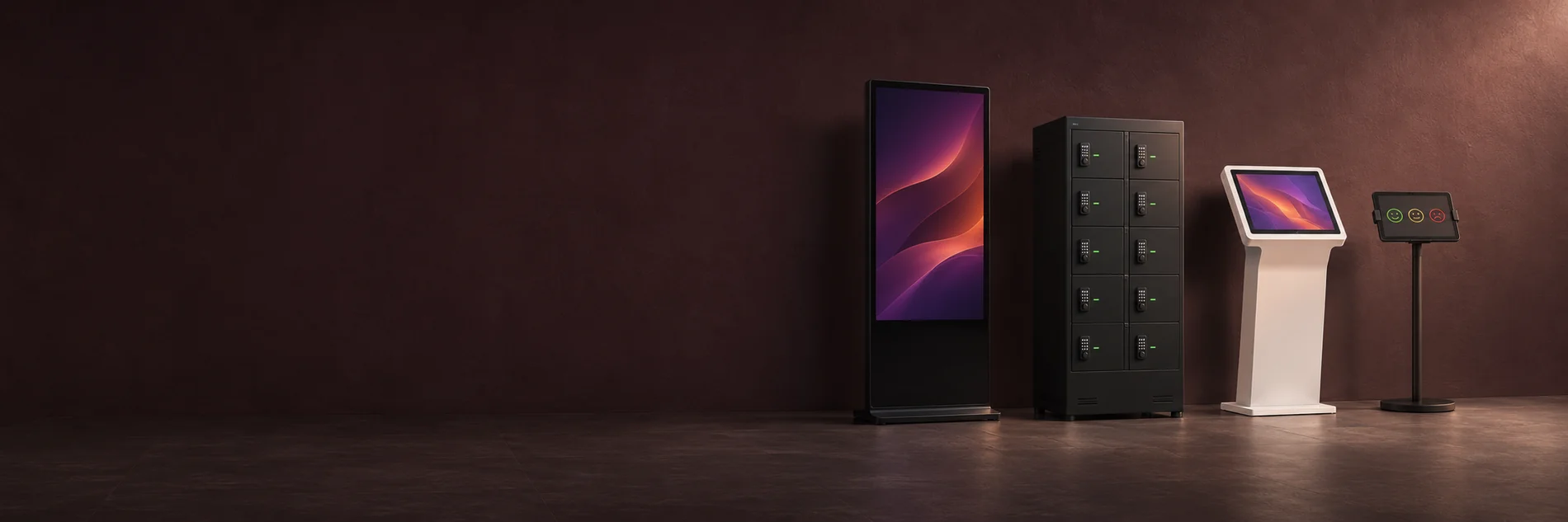
Bring your spaces to life with connected displays, intelligent kiosks and practical technology solutions.

Bring your spaces to life with connected displays, intelligent kiosks and practical technology solutions.

Thoughtful technology.
Built around your business.
We are a set of professionals working to provide state-of-the-art technologies in the form of products and services from medium to large-scale businesses in Dubai, Sharjah and across the GCC since 2008. We specialize in Interactive Kiosks, Digital Signage, Customer Feedback System, Onsite and Online customer Survey System, Video Walls, Kiosk Machines, iPad Kiosk in Dubai, Samsung Kiosk, Tablet Kiosk, CCTV in Dubai, CCTV maintenance, Mobile CCTV Systems, iPad stands in Dubai, Tablet stands, Structured cabling, Audio and Visual Systems, Multimedia installations and configurations.
Here at RSI Geeks we strive to provide best digital signage in Dubai — a unique and vibrant approach towards the cruising market. Since digital signage or electronic signage has a lasting and attractive impression on the visitors hence we work hard to bring in the top notch digital signage products for our customers. Be it small or large screens, indoor or outdoor — we work on every type of digital signage in Dubai and UAE.
Discover innovative technology solutions designed to improve customer experiences, simplify operations and support your business.

Capture real-time customer opinions with interactive surveys, emoji ratings and easy-to-use feedback kiosks.

Make employee services easier with digital HR access, attendance information and self-service requests.

Showcase smartphones with secure anti-theft display stands built for modern retail environments.

Tailor-made kiosk solutions with modern hardware, touch displays and business-specific applications.

Help visitors navigate buildings, explore information and interact with smart touchscreen displays.

Protect your premises with reliable surveillance cameras, video recording and monitoring solutions.
Our team of designers and fabricators can turn your ideas into reality. From self-service and advertising kiosks to multi-screen, custom-shaped and even robot-style kiosks, we can bring almost any concept to life with interactive touchscreen technology.

Discover insights, industry trends and innovative technology solutions.
 Interactive Kiosks
The interactive self-service kiosks are smart machines with a touch screen and few other devices that let customers quickly access services without being waiting in long queues, and sometime at any time of the day. Businesses can offer various services such as form a very simple service like ordering food to a complex service like renewing drivers license, making payment, or complex government services. Dubai is one of the most modern and advanced cities in the world and always love to stay one step ahead from everyone else. If you roam around the city, you will notice these interactive touchscreen self-service kiosks are everywhere right from the Airports to metro stations, hotels, restaurants, hospitals & pharmacies, government service centers, retail businesses and everywhere else. That trend is not only limited to Dubai, but in Abu Dhabi, Sharjah, and other emirates these interactive self-service kiosks are serving countless customers 24/7 and even on the weekends and holidays. These interactive self-service kiosks are enabling people to quickly access their required services, whether it is acquiring information, printing or scanning documents, checking-in or checking out, registration, or even payments and transactions, these smart kiosks are delivering uninterrupted, personalized and satisfactory customer experience. Customers don�t want to stand in long queues, instead they prefer tapping on a screen and instantly getting the required service. Furthermore, the interactive self-service kiosk industry is showing a steady growth of around 10% over several years, which indicates a huge potential in growth and broader adaptation. Businesses and organizations can stay ahead of their competition by offering exceptionally fast service to their customers, visitors and tourists. In this blog we will discuss how businesses can maximize the ROI by effectively utilizing the customized interactive self-service kiosk solutions and we will also discuss their impact on various service sectors in Dubai. See Also: What is a Self Service Kiosk? Here�s All You Need to Know Understanding the ROI of Self-Service Kiosks: How Smart Kiosks Pay for Themselves? Whenever a business decides to by a new tool, solution or system, the first thing that came to the mind of owners and business leaders is Return on Investments, or in-short ROI. The basic definition of ROI is that how much a money a business can generate by investing in that solution or system or anything. There is no hard and fast rule, but many businesses suggest that an interactive self-service kiosk system can return their investments in just 3 to 12 months, depending on their industry/service sector. The initial investment is for buying the physical kiosk or hardware and the software that runs this hardware. Moreover, the operational and maintenance cost for these kiosk machines is very low, a single interactive self-service kiosk can operate for years without requiring any expensive repair or replacement. On top of that, a simple upgrade to software can make them relevant for many more years. An interactive self-service kiosk operated 24/7 non-stop, serving hundreds upon hundreds of customers, while not only reducing your per-service cost but also enabling human agents to perform well by balancing their workload. These all benefits translate into measurable ROI and that is the reason why these smart kiosk solutions tend to cover their cost in mare months. The interactive self-service kiosks also reduce customer churn rate, and help boosting upselling. Businesses can customize these smart kiosks as per their requirements, needs, business processes and internal workflows. Which make them more effective and tend to yield more return than standardized solutions. That is why service sectors in Dubai, such as government organizations, hospitality, transportation, retail and several other services are rapidly adopting customized interactive self-service solutions. See Also: What are the Types of Interactive Kiosks? Boost Operational Efficiency: Save Resource and Money on Day-to-Day Operations Running a business in a highly competitive and modernized city like Dubai, Abu Dhabi, Sharjah or other emirates of UAE can be very expensive. The government impose strict consumer protection, health & safety and other regulatory measures. Businesses have to pay rents, raw materials, relatively high wages and employee benefits which is why businesses happily welcome modern technologies and solutions that can optimize their operational cost and boost efficiency. The interactive self-service kiosks positioned as an ideal tool to significantly reduce the operational cost and drive efficiency in day-to-day operations. The most challenging aspect of customer service is the customers� desire of instant gratification. No one likes to wait in long waiting line or spend hours in crowded waiting areas. Customers want instant response and fast service delivery. Expanding team doesn�t only cost for hiring and training new employees but it will also reduce your profitability. The interactive self-service kiosks on the other hand have initial installation cost with neglectable operational cost. Which makes them ideal for modern customer service centers. These smart kiosks can handle hundreds of customers, without ever undermining customer experience or slowing down or making mistakes which are common with human employees. When the interactive self-service kiosks are installed, the employees have less work to do. Under a balanced workload the employees tend to perform better, make fewer mistakes and feel less fatigue. So, having interactive self-service kiosks doesn�t only help reducing the per-service cost but it also helps improving employee performance. When employees are happy and satisfied, they tend to be more productive. High-quality service not only satisfy customers, but it also helps nurturing customer relationship and drive customer loyalty. The long-term impact of smart kiosks is operational excellence, loyal customer base and steady business growth. See Also: Why more self service kiosks are being used in Dubai now? Elevate Customer Experience: Fast Service Delivery Makes Customer Happier and Loyal People living in a modern city like Dubai, Sharjah, Abu Dhabi or any other region of UEA care a lot about their schedules. It is inconvenient to take a break from the work, stuck in traffic and reach to service center to realize that your token number will be called in 40 to 45 minutes. It could be very frustrating for some customers. Especially the younger generation and Gen-Z, not only value time but want instant gratification. Having a customer service center that instantly great your customers, ensure accurate and fast service delivery means higher customer satisfaction. Moreover, the interactive self-service kiosks elevate customer experience by empowering your customers, by giving them more control and power on their interaction and delivery higher privacy and security. People are very concerned about their personal information, sometimes, customer show hesitation in sharing their information with human agents, but the interactive self-service kiosks solve that problem for good. The customers don�t have to interact with human agents, their information is protected by encryption and advanced security measures which gives them more confidence and help building trust and loyalty. Furthermore, the colorful flashy screens offer a better customer experience with their ability to support multiple languages, smart integration with other systems and mobiles, step-by-step on-screen instructions and lightening speed. Businesses can leverage smart software and AI to further personalize customer interaction which can greatly elevate the overall customer experience and satisfaction. The happy and satisfied customers not only tend to come back but they can be a very good brand advocate by telling others about their happy experience at your service center. The interactive self-service kiosk does much more than just optimizing and digitalizing internal process, but it delivers a highly satisfied customer experience. See Also: Why Interactive Self-service Kiosks are the Ultimate Customer Experience Transformation Tool? How Different Service Industries in Dubai are Leveraging Interactive Self-Service Kiosks An interactive self-service kiosk is basically a specialized computer terminal with a touchscreen and various other devices such as printers, card readers, biometrics tools, payment tools, POS, ID scanners (Emirates ID, Passport, RFID, etc.), Barcode/QR Code Scanner, and hundreds of other specialized tools. This enables them to serve in literally any service sector and make possible to handle from very simple to very complex multi-step services and financial transactions. Furthermore, businesses can customize an interactive self-service kiosk to deal with their unique challenges and exclusive service needs. This is the reason why smart kiosks are equally popular in almost all service sectors in Dubai. Here are the most common service industries which are rapidly adopting to interactive self-service kiosks: 1.��� Customized Interactive Self-Service Kiosks in Retail Services Dubai is a home to some of the world�s biggest and most beautiful shopping malls in the world. This is evidence of a very large-scale retail industry. Not only local shoppers but tourist from all around the world come to Dubai to enjoy its most unique and luxurious retail shopping experience. Which makes retail industry much more competitive than anywhere else in the whole world. Inside these shopping malls and markets, retail businesses eagerly striving to deliver the best shopping experience. The competition resulted in a race towards adopting modern technology and tools to elevate customer experience and to drive operational efficiency. The interactive self-service kiosks offer incredible solutions to the problems retail businesses are facing. Many popular retail businesses have already started offering exclusive fast-track self-service checkout lanes at their stores. The customer response is phenomenal, regular customers are loving and embracing the option of scanning their own items, using their digital or contactless payments and quickly checking out. Moreover, where these interactive self-service kiosks are greatly elevating customer experience, they are also offering various tools to businesses. Such as businesses can offer endless aisles and inventory through the touchscreen kiosks, and they can also use them for upselling, marketing and gathering very useful analytical data. This is what makes interactive self-service kiosks an ideal solution for modern retail businesses and it can help them gain great competitive advantage and achieve higher cost-optimization in long-terms. See Also: The Evolution of Supermarket Shopping: Self-Checkout Machines 2.��� Transforming the Hospitality Sector with Seamless Guest Check-ins Dubai is considered to be one of the most popular hotspots for both leisure and business tourism in the entire gulf. Not only Dubai, Abu Dhabi and Sharjah but other regions of UAE welcome and host millions of tourists annually and from all around the world. This results in a very competitive hospitality sector thus every hotel, resort, and restaurant wants as soon as a guest steps into their facility they feel like a VIP. The biggest hurdles are delays in services, common clerical mistakes and poor service during peak hours. When a guest had to wait in the lobbies, the check-in process looks complicated and service delivery is slow especially in the case of international guests who are already tired of long flights, a poor or sub-standard experience can completely ruin the business�s reputation. Thus, the interactive self-service kiosks especially designed for hospitality sector can be a dream come true for hotels, resorts, and restaurants, etc. A hotel check-in kiosk offers instant service, provide quick answers and deliver a personalized customer experience. Guests can seamlessly check-in, make payments, customize their packages, opt for additional services, and access any required information, by just a few taps on a touchscreen via multi-lingual intuitive UIs. Beyond the lobbies and check-ins, Hotels, resorts and restaurants in Dubai are utilizing these interactive self-service kiosks in multiple places in their premises. This also help hotel servers to spend more time in personally greeting the guests, rather than doing entries on a computer or making copies, etc. See Also: The Benefits of Implementing Self Check-in Kiosks in Hotels 3.��� Government�s Smart Services and Dubai� Paperless Initiative The Government of UAE is among the world�s very few governments who succeed in fully digitalizing their public service sector by integrating online, mobile and smart AI based solutions. The Dubai government has a vision of becoming world�s first completely paperless city. The government works round the clock to offer easy access to public services to its citizens and tourists. The UAE hosts a large population of expats and annually millions of tourists visit different regions of the country. This is why Dubai, Abu Dhabi, Sharjah and other regional governments of UAE are rapidly commissioning these kiosks in their service centers. The UAE government has implemented advanced digital tools that not only secure the citizens� information and data, but also make it possible to digitally access any government service, anytime they want. The customized interactive self-service kiosks are playing a huge role in digitalization drive. These kiosks are now being implemented in almost all ministries, departments and government service centers. Citizens and visitors can quickly check-in or sign-in via secure and biometric authentication methods. They can navigate through multi-lingual intuitive UIs which offer step-by-step instructions from start till end to ensure a seamless customer experience. In other countries some basic government services such as renewal of ID card or driving license or issuance of a certificate or documents notoriety could involve a complex bureaucratic process which could take many hours and, in some cases, multiple visits. But in Dubai, Abu Dhabi, Sharjah or any other emirates of UAE, citizens can do that from an interactive kiosk or mobile app within a few seconds. Same is the case with complex services, which involve documents scanning, printing, and payments are also digitalized and simplified through these incredible interactive self-service kiosks. These smart kiosks are not only elevating citizens� experience but also boosting the operational efficiency and performance of the entire service center. See Also: Adopting Self-Service Payment Kiosks for Government Services 4.��� Fast Service, More Control and Large Order at Quick Service Restaurants (QSR) In a modern fast-track lifestyle people tend to measure the quality of the service on the bases of time as well. As I have mentioned earlier that in Dubai, Abu Dhabi, Sharjah and other regions of UAE a large expat population resides who are majorly working people and heavily rely on quick service restaurants for their daily needs. That is why the modern restaurants and cozy cafes strive to adopt to modern technology-based solution to ensure fast service delivery and better customer interaction. The interactive self-service kiosks can instantly take order, offer customers to explore through the entire menu in a few taps, and let them customize their order and pay instantly. Usually quick service restaurants (QSR) places multiple interactive self-service kiosks closer to the entrance, which allow customers to instantly place their order as soon as they stepped in. The popular restaurant chains like McDonalds, KFC, Burger King, etc. have reported huge surge in sales after implementing interactive self-service food ordering kiosks. Smart interactive self-service food ordering kiosk helps restaurants and cafes to not only elevate customer experience but it also helps them to level up their upselling game and utilize these kiosks to promote high-value offerings and achieve higher operational efficiency for higher profitability. The interactive self-service food ordering kiosks present food items and add-ons in a very effective way, utilizing eye-catchy visuals, media and detailed information about the item. Moreover, the food ordering kiosk never forgets to offer a desert, soda or fires, when someone is ordering their main meal. These features can greatly increase the average check size. On top of that the efficiency of the human servers also improved as even during peak hours, they work under balanced workload and the customer never gets wrong order, as they chose it directly from the screen, and typed in what exactly they want. A smart food ordering kiosk can be a game changer for a quick service restaurant (QSR) in Dubai. See Also: The Impact of Self-Service Payment Kiosks on QSRs 5.��� Interactive Self-Service Kiosk for Healthcare & Seamless Patient Check-ins Similar to any other service sector the healthcare industry in Dubai, Abu Dhabi, Sharjah and other regions of UAE also maintain highest benchmarks when it comes to service delivery and patient care. The healthcare in UAE offers world-class service which are also monitored and highly regulated by the governments. In past few years, we have witness rapid adaptation of digital solutions and interactive self-service kiosks in the healthcare industry in Dubai, Abu Dhabi, Sharjah and other regions of UAE as well. Traditionally when a patient visits a hospital, clinic or pharmacy, they immediately sign-in to a long queue, sometimes it could take up to an hour of waiting before you could see a doctor. The healthcare sector in UAE transforming their processes just to change exactly that. A self-service interactive kiosk at a hospital, clinic or pharmacy let patients instantly sign-in, book an appointment, download and print their lab reports, update their documents and insurance, make payments and access to various services and information directly from a touchscreen. Moreover, these smart interactive self-service kiosks are very effective tools to help doctors, nurses and admin staff to their job better. A self-service interactive kiosk can handle major paperwork and basic administrative tasks, which let administrative staff focus more on improving patient experience and focusing on more complex and productive tasks. This also help healthcare staff to focus on patients who require urgent services and help improving the overall operational efficiency and performance of the entire facility. See Also: The Future of Healthcare: Self-Service Kiosks for Patient Management Designing A Self-Service Kiosk & Overcoming Common Implementation Challenges Designing and implementing a perfect interactive self-service kiosk is something you shouldn�t rush about. It requires a careful decision, proper research, and plan to be able to design a perfect kiosk which can truly make a difference and help businesses achieve their long-term goals and success. Your customers should be able to interact with the kiosk without any problem, they should be able to easily avail the service they want and the process should remain familiar and simple enough to gain customer�s trust and confidence. Every service sector has its own unique needs and objectives, thus, every business requires a set of exclusive and industry specific features to be able to achieve their goals. However, there are some commonalities that are associated with a common human behavior. For example, a good quality touch screen which support multiple languages, have an intuitive UI (User Interface) with large buttons and properly optimized features for touch screens and all required peripherals, such as Emirates ID reader, POS machine, NFC, Biometrics or any other features that is necessary to deliver the complete service through the smart kiosk. See Also: How to Design a Customized HR Self-Service Kiosk? An interactive self-service kiosk is an ideal solution for the service sector, but similar to any other digital solution when businesses implement them, they might face some small challenges too.� One of the most common challenges is the budget, businesses try to stuff as many features and services as they could, which can sometime significantly raise the cost. Thus, it is important to identify the services which can easily be digitalized via an interactive self-service kiosk. Another challenge is technical support, a machine could turn off, or freeze or printer could run out of paper, or customer choose incorrect option, all such common problems should have a pre-defined solution and the on-site team should be given proper training to handle all such scenarios. The advancements in technology never stop, and the Dubai always races towards the future. The modern and upcoming interactive self-service kiosks are rapidly integrating the AI (artificial intelligence) and advanced features. Technologies like facial recognition, AI Agents, voice-commands and other such tools are gaining traction. The employees can easily think that these new interactive self-service kiosks might replace them, thus the businesses should first train their staff and guide them and help them work hand-in-hand with these technological solutions to be able to achieve service excellence. See Also: List of Customized Interactive Kiosks Designed by RSI Concepts Conclusion Interactive self-service kiosks have proven to be much more than just another popular technology trend. These smart kiosks are not only capable of delivering excellent customer experience but they can make fundamental changes in the traditional ways of how businesses operate and engage with their customers. From bustling shopping malls, retail outlets and fast-paced quick service restaurants (QSRs) to high-end luxury hotels, modern airports, and visionary public service centers, the interactive self-service kiosks are redefining the service sectors to embrace an AI-driven future of smart technologies. Investing in Interactive Self-Service Kiosks is crucial for businesses operating in Dubai, Abu Dhabi, Sharjah and other regions of UAE, as it not only helps them boost operational efficiency it also offers long-term sustainable benefits and rapid ROI. In this blog we have discussed how interactive self-service kiosks can elevate customer experience and how different service sectors are leveraging them for operational excellence. If you want to learn more about them or if you want our help to design and implement a customized interactive self-service kiosk for your business, please feel free to contact us through our Contact Us page or leave a comment in the comment box below and we will get in touch with you soon. See Also: How Self-Check-in Kiosks Are Transforming the Travel Industry
 Digital Payments
The way people pay for products and services has changed dramatically over the past decade. What was once a world dominated by cash transactions is rapidly evolving into a digital first economy where speed, convenience, and security drive customer expectations. Today, consumers can complete purchases using debit cards, credit cards, mobile wallets, QR code payments, contactless technology, and online payment platforms. This shift toward cashless payments is transforming how businesses operate and how customers interact with services. For organizations across retail, healthcare, transportation, hospitality, government services, and financial sectors, adopting cashless payment solutions is no longer simply a technological upgrade it has become a strategic necessity. Understanding Cashless Payments Cashless payments refer to any transaction completed without the exchange of physical currency. Instead, payments are processed electronically through secure digital systems. Common forms of cashless payments include: Credit and debit cards Mobile payment applications Contactless payment technology QR code payments Digital wallets Online payment gateways Bank transfers The goal of cashless technology is to create a faster, more convenient, and secure payment experience for both customers and businesses. Additional forms of cashless payments include: Prepaid cards Gift cards Travel cards Corporate prepaid cards Transit and metro cards Salik-linked payment services Mobile phone credit payments These payment methods continue to expand the cashless ecosystem by providing customers with greater flexibility and convenience when completing everyday transactions. Prepaid and stored-value payment solutions continue to play an important role in the cashless economy. Examples include gift cards, travel cards, corporate prepaid cards, student cards, and transit cards. These solutions provide convenience while helping users manage spending and access services efficiently. See Also: What Is a Self-Service Payment Kiosk? Unveiling the Future of Transactions The UAE has also demonstrated how digital payment ecosystems can extend beyond traditional retail transactions. Salik-linked services have shown how integrated payment platforms can simplify transportation and parking-related payments while improving user convenience. Another innovative payment method involves the use of mobile phone credit. In certain situations, customers can pay for services directly through their mobile account balance. This method is commonly used for services such as parking payments and provides an additional layer of flexibility for users. Why Businesses Are Moving Toward Cashless Transactions Consumer behavior continues to evolve as digital technologies become more integrated into daily life. Modern customers prioritize convenience and efficiency. They expect payment methods that allow them to complete transactions quickly without carrying cash or waiting for manual processing. Businesses are responding by implementing payment solutions that reduce friction and improve the overall customer journey. The transition toward cashless payments provides several operational and customer service advantages that directly impact business performance. See Also: How to Choose the Right Self-Service Payment Kiosk? Cashless Payments in the UAE: Building a Digital Economy The UAE continues to establish itself as one of the world's leading digital economies through its commitment to innovation and smart government initiatives. Across both the public and private sectors, digital payment solutions are becoming an essential part of everyday life. Dubai, in particular, has accelerated the adoption of cashless payment technologies as part of its broader digital transformation strategy. Through initiatives led by Dubai Digital and other government entities, the emirate has announced its ambition to become approximately 90% cashless by the end of 2026. This vision reflects the growing importance of digital payments in creating seamless customer experiences, increasing operational efficiency, and supporting economic growth. From retail stores and restaurants to transportation and government services, cashless payments are becoming the preferred method of transaction throughout the UAE. As customer expectations continue to evolve, businesses that adopt modern payment solutions will be better positioned to align with the country's digital future. Faster Transactions and Improved Customer Experience One of the most significant benefits of cashless payments is speed. Traditional cash transactions often require employees to count money, provide change, verify amounts, and manage cash drawers. These additional steps can increase transaction times and contribute to longer queues. Cashless payment solutions streamline the entire process. Customers can simply tap a card, scan a QR code, or use a mobile wallet to complete transactions within seconds. Faster transactions lead to: Reduced waiting times Improved customer satisfaction Increased service efficiency Higher transaction capacity For businesses that experience high customer volumes, these improvements can have a substantial impact on daily operations. See Also: Adopting Self-Service Payment Kiosks for Government Services Enhanced Security for Businesses and Customers Security remains a major consideration for organizations managing financial transactions. Handling large amounts of cash presents several challenges, including theft risks, counting errors, and cash management costs. Cashless payment systems help mitigate many of these concerns by reducing dependence on physical currency. Advanced encryption technologies, secure payment gateways, tokenization, and authentication protocols help protect sensitive transaction data. For customers, digital payments provide peace of mind through secure transaction records and fraud protection measures. For businesses, cashless solutions reduce exposure to risks associated with cash handling and storage. See Also: Self-CheckIn Kiosks: Enhancing Privacy and Security for Users Operational Efficiency and Cost Reduction Beyond improving customer experiences, cashless payment systems contribute significantly to operational efficiency. Businesses that rely heavily on cash transactions often invest considerable time and resources in: Cash collection Cash counting Reconciliation processes Banking procedures Cash storage and transportation By reducing cash dependency, organizations can streamline these processes and lower operational costs. Employees can spend less time managing transactions and more time focusing on customer service, business growth, and strategic initiatives. Supporting Digital Transformation Digital transformation is reshaping industries worldwide. Organizations are increasingly investing in technologies that improve service delivery, optimize operations, and enhance customer engagement. Cashless payment solutions play a critical role in this transformation. When integrated with self-service kiosks, mobile applications, customer portals, and enterprise systems, cashless technologies create a seamless and connected customer experience. These integrations allow businesses to collect valuable transaction data, improve reporting capabilities, and make more informed business decisions. See Also: Integrating AI in Payment Kiosks for Enhanced User Experience The Growing Demand for Contactless Payments One of the fastest growing segments within the cashless payment landscape is contactless technology. Customers increasingly prefer payment methods that allow them to complete transactions with minimal physical interaction. Contactless cards, mobile wallets, and QR-based payment solutions offer a convenient and efficient alternative to traditional payment methods. The widespread adoption of contactless payments reflects a broader shift toward frictionless customer experiences that prioritize convenience and speed. Industries Benefiting from Cashless Payment Solutions Cashless payments are delivering value across a wide range of industries. Retail:�Faster checkout processes and improved customer convenience. Healthcare: Simplified payment collection and reduced administrative burden. Government Services:�Efficient fee collection and improved citizen experiences. Transportation:�Seamless ticketing and fare payment systems. Hospitality:�Enhanced guest experiences through convenient payment options. Education:�Efficient collection of tuition fees and service payments. As payment technologies continue to evolve, organizations in virtually every industry can benefit from adopting modern cashless solutions. See Also: The Role of Payment Kiosk in Streamlining Retail Transactions Cryptocurrency Payments and Emerging Technologies As digital payment technologies continue to evolve, cryptocurrency has emerged as an area of growing interest within the global payments landscape. Cryptocurrencies such as Bitcoin, Ethereum, and stable coins are increasingly being explored as alternative payment methods by businesses and consumers alike. While adoption levels vary depending on regulations and market demand, cryptocurrencies demonstrate how payment technology continues to advance beyond traditional financial systems. Blockchain-powered transactions offer potential advantages such as transparency, security, and decentralized payment processing. Although cryptocurrency payments are not yet as widely adopted as traditional digital payment methods, they remain an important development that businesses should monitor as part of the future evolution of commerce. Organizations that stay informed about emerging payment technologies will be better positioned to adapt to changing customer preferences and future market opportunities. Looking Ahead The future of payments is increasingly digital. Consumers are embracing technologies that offer greater convenience, flexibility, and security. Businesses that adapt to these changing expectations will be better positioned to remain competitive and deliver exceptional customer experiences. Cashless payment solutions are no longer simply a trend they represent the next stage in the evolution of commerce and customer service. Organizations that invest in cashless technologies today are preparing themselves for a future where digital transactions become the standard rather than the exception. See Also: Analyzing the Impact of Payment Kiosks on Consumer Behavior Conclusion Cashless payments are transforming how businesses and customers interact. By improving transaction speed, enhancing security, reducing operational costs, and supporting digital transformation initiatives, these solutions deliver measurable benefits across industries. As customer expectations continue to evolve, organizations that embrace cashless payment technologies will be better equipped to provide efficient, secure, and customer-focused services. The move toward a cashless future is already underway, and businesses that act now can position themselves at the forefront of innovation and growth.
 Privacy & Security
Imagine after a busy day you walk into a hotel, or at a busy hour you walk in to a hospital or at an airport or even just at a fast-food restaurant (QSRs). Do you want to stand in long queues? Or would you like to go straight to an interactive self-check-in kiosk and do your business? Obviously, everyone prefers the most efficient way. This is exactly what the interactive self-checkin kiosks are offering. Especially when it comes to user security and privacy, the self-check-in kiosks not only adhere to compliance requirements but certainly exceed them at a great margin. There are tons of additional software and hardware features available that can offer various levels of user security and data privacy while greatly enhancing the customer experience. The self-checkin interactive kiosks are highly customizable, which help businesses deliver the exceptional customer experience at a completely unprecedented level of efficiency. This is what transform the self-check-in kiosks from a �nice-to-have� convenience to a critical and integral part of present day�s customer satisfaction strategy. If you are living in Dubai, Sharjah, Abu Dhabi or anywhere else in UAE, you would have experienced one of such devices at a restaurant/QSR, healthcare facility, travel industry (airport, metro/bus stations) or at a government service center, etc. These interactive self-checkin kiosks are popping up everywhere. This rapid adaptation also led to speculations and rumors; the most popular myth is the security. In this blog we will not only debunk this myth but we will also highlight key features that help enhancing user security and privacy. Why Self-Check-In Kiosks Matter More Than Ever in 2026-2027? Before we start exploring the features that strengthen self-check-in kiosks� security, it is also important to understand why ever business needs these highly adoptable digital solutions to enhance customer experience and boost operational efficiency. According to several global studies and trusted surveys, every year more customers are showing interest in the self-service check-in kiosks: Customer Preference Metrics Survey Results 1 Prefer self-service over staff ~66% 2 Comfortable using kiosks ~72% 3 Prefer self-service technologies ~73% 4 Younger consumers find kiosks more convenient (Most Gen Z) ~82-86% Where the consumers are showing increasing interest in interactive self-service kiosks the concerns about security and data privacy are also rising. The cyber-attacks, data breaches, digital identity theft, etc. are everyday news, which significantly increase users� concerns. The interactive self-checkin kiosks are specifically designed to minimize the human exposure to sensitive data. This makes self-check-in kiosks more secure than traditional service counters. See Also: The Rise of Self-Service Payment Kiosks: A Look into the Future Along with customer concerns, the government regulations are also getting strict day by day and require businesses to adopt to technology and practices that eliminate loopholes and make customer interaction more secure and robust. Here in UAE the hospitality, healthcare and aviation have shown the strong adaptation of self-check-in kiosks and relevant technologies. Here are a few reasons why the leading industries are proactively adopting self-check-in kiosks: Consumers� Demand for Control and Speed: The modern consumers prefer self-checkin, majorly to avoid long waiting lines. Moreover, it gives them more control and make their experience more intuitive, personalized and satisfactory. Popularity of Contactless and Safe Interaction: The customers greatly appreciate kiosk�s contactless operation to avoid or minimize physical touchpoints. The mobile app base check-ins/registrations, QR code-based transactions, etc. are overwhelmingly apricated. 24/7 Operation: The interactive self-checkin kiosks can operate 24/7 and deliver services without any interruption. Thus, the customers get access to services during off hours or even during the vocations or public holidays. Challenges in Enhancing Operational Efficiency: For any business optimizing and boosting operational efficiency is a continuous struggle. The self-check-in kiosks can serve much more customers with higher accuracy in one hour than any traditional human agent. Reduction in Labor Cost and Scaling Expenditure: With rise in demand the business has to proportionally increase the human staff. The self-check-in kiosks cut the need of staff and help optimizing labor cost and reduce scaling service expenditure. Demand of Analytical Data for Smart Decisions: The self-check-in kiosks are a goldmine of data. That can produce analytical, statistical and predictive data, which can help managers and business leader to make smart decisions. Broader, Inclusive and Accessibility Support: The self-check-in kiosks offer multilingual, touchscreen, voice commands, and various other features that can help businesses comply the regulations and make services more accessible for broader audience. Drive Innovation with AI and IOT Technologies: Businesses can harness the incredible potential of the IOT and AI technologies to add enhanced features in their self-check-in kiosks to maximize customer satisfaction and loyalty. Integration with Third-Party Systems and Channels: The self-check-in kiosks comes with a smart software solution which is capable of integrating with smart technologies, mobile apps, web portals, ERPs, CRMs, and any third-party business management tool. Self-CheckIn Kiosks Elevate Staff�s Efficiency: There is a widespread myth that self-checkin kiosks will take jobs, but the exact opposite is true. These kiosks can greatly enhance staff�s efficiency by distributing their workload and help them prioritize productive tasks. Moreover, the interactive self-checkin kiosks are capable of offering great levels of customization and upgrades down the road. Which not only make them more relevant and effective for future challenges but also highly efficient in optimizing operational efficiency. Businesses can easily implement a new language, rather going through the lengthy process of hiring a new service agent with required language proficiency. Businesses can very quickly include more services in the existing echo-system of the self-checkin kiosks and can further add additional software and in some cases hardware features. The above-mentioned features make self-checkin kiosk an absolute essential for the current and future challenges of 2026-2027. See Also: The Benefits of Implementing Self Check-in Kiosks in Hotels How Self-CheckIn Kiosks Can Enhance the Security and Privacy for the Users? In this modern day and age, the biggest concern any individual has is the �privacy� and �data protection�. When someone is at a public place, checking-in or registering, the first thought that comes to one�s mind is should I input my highly sensitive personal and financial information to the kiosk, will it be secure and protected? Etc. and many other such thoughts. Thus, it is crucial to gain your customer�s trust by ensuring and enhancing the security and data protection of the self-checkin kiosks. Here are the fundamentals of the security, privacy and data protection in terms of interactive self-checkin kiosks: Privacy by Design: There some fundamental components, such as privacy screen, the placement of the kiosk in a secure spot, adding two-factor sign-ins and ensuring the session got removed after the customer logout or done its business can greatly boost the security and privacy of the system and ensures a higher level of data protection. Securing the Software Application: The core operating system or OS (usually Windows/Linux or Android) should be secure, inaccessible from the kiosk interface and must have a protected kiosk mode. The administrative/root accounts should be disabled and the extra ports such as USB, HDMI or WiFi, Bluetooth should be disabled. Strong Encryption: The encryption is a key to build a highly secure system. Usually, the kiosks serve as a client, and constantly communicate with the server, moreover, there are multiple other systems which are integrated and synchronized which results in a high-volume real-time data traffic, thus this should be protected by strong encryption in place. Network & Access: Since the kiosk is always communicating with the mainframe server, and several other systems, thus it must have a network or access point. The self-checkin kiosks should be setup on a separate network connection, it is better to use cable instead of wireless. Moreover, the network should be protected by a firewall and with limited access only to ensure, no unauthorized connections can be made outside the network. Biometric Authentication: Here in UAE, it is very common to use Emirates ID card for authentication, since it is the most secure medium to authenticate a user. That is why adding such features like Emirates ID, Biometric verification, facial recognition, and two-factor authentication can greatly enhance and raise the security of the self-checkin kiosk. Hardware Security: Where the software security, encryption and authentication are important the physical protection or hardware security is equally important too. The kiosk must have no ports (USB, HDMI, Network, etc.) should be exposed/accessible. The frame should be vandal-proof and the maintenance windows/doors should be locked. These are some fundamental components that are crucial to enhance privacy, security and data protection of the user. These features not only ensure security, but in long-terms serve as a strong selling point and can gain a great competitive advantage. It took years to build trust but it took a minor data breach to devastate a business�s reputation. That is why it is important that business take necessary steps to make their self-checkin kiosks more secure and user friendly. See Also: Visitor Management Kiosks for Enhanced Guest Experience Here are a few advanced security strategies and basic tools that can greatly enhance the privacy and security of not only you self-checkin kiosk but any other digital solution: Application Sandboxing: Application sandboxing is a very effective technique which involves running the self-checkin kiosk application in an isolated container. This technique limits the access very effectively thus even if a malware effects the main or any connected system, it can�t spread to the entire system. Multi-Factor & Biometrics Authentication: The self-checkin kiosks always deal with sensitive information, thus it is mandatory to implement a multi-factor authentication. This is a very simple technique and can be done by implementing an email/SMS OTP, biometrics or facial recognition tools. Encryption Key Management: Where the encryption is crucial, the custody of the encryption key is equally important. Usually, the software developers keep the encryption key on the kiosk, however, it should be in a dedicated hardware module and it is ideal to use TPM (Tempered Proof Module) and regularly rotate the encryption key. Continuous Monitoring and Analytics: Collecting analytical data, monitoring the system usage and system logs is also crucial. Such as unusual traffic, multiple failed sign-in attempts, etc. Adding multi-factor authentication for the administrative users is also important, such as two-factor, OTP, biometrics, or facial recognition enhances security. Emergency Response: The emergency response is one of the most underrated security features. A good emergency response protocol must have key features via remote control, such as security patch updates, remote enable/disable feature, remote shutdown and even remote kill-switch or remotely wiping out all the data on the kiosk, etc. With that being said, there is another important question which is how to implement all those key security features to your self-checkin kiosk system? Well! It is not as that hard to implement security features in a self-checkin kiosk or for the matter of fact in any digital solution. All you need is a good plan and understanding of these features. I have compiled a simple step-by-step guide on how to implement crucial privacy and security features to your next self-checkin kiosk solution to ensure highest level of data protection: Make a Detailed Project Plan: For any project it is crucial to have a concrete project plan but for a self-checkin kiosk which could be exposed to additional threat, it is crucial to have a detailed project plan. Start identifying the key functionalities and the users of your kiosk. The second part that your project plan must have is the list of all system or third-party integration that are essential for the required functionalities. Select the Right Hardware: It is important to choose the right hardware components. The hardware components are the touch screen, keyboard, Emirates ID card reader, payment devices, scanners, printers, camera, computer board, and even the frame itself. Moreover, consider the placement of the kiosk, if it is placed at a remote location, unattended then it might require a more rigid body and additional vandal proof features. Consider Security from the Ground Up: Choosing a secure development or considering security factors from the ground up can deliver remarkably secure applications. Usually, engineers first develop a software and then go through security feature development, however, including security features from the beginning can not only save a lot of efforts, but also deliver more layers of security and protection to the system. Lock Down the Software/Sandboxing: When deploying the kiosk software, ensure that the software deployed on the kiosk is placed in a secure container, the kiosk mode is enabled and password protected, the operating system is locked and protected and all unnecessary accesses are removed. Physically conceal unused ports and also disable them from the operating system for additional security. Setup Secure Network: One of the most crucial aspects is the network. Each self-checkin kiosk is connected to the server through the network. It is ideal to use a wired and dedicated network connection. Adding a VPN can further improve the security. Furthermore, the network should only allow selective traffic and should only offer limited access to ensure optimum levels of security and protection. Must Perform Pentest: It is ideal to hire a third-party specialized firm to conduct pentest. Usually, the pentest is executed after the deployment and UAT (user acceptance test), however, it is important to perform pentest after design phase, development phase and before and after the deployment. Earlier petest can save a lot of time and cost, but it is mandatory to perform a pentest before the production deployment. When a self-checkin kiosk is properly designed and configured, it can be one of the most secure customer touchpoints. It electronically processes all sensitive information, preventive any accidental exposure. Every industry has different application and requires a different level of security, but above-mentioned aspects of security and privacy are essential for data protection. See Also: The Role of Self-Service Payment Kiosks in Reducing Operational Costs Conclusion The self-checkin kiosks are no longer a convenience, but has transformed into an essential and integral part of modern customer experience strategy. We have witnessed a huge rise in self-checkin kiosk in various industries such as hospitality, healthcare, aviation, retail, government services, etc. Businesses in Dubai, Sharjah, Abu Dhabi and all around the UAE are eager to please their customers by integrating advanced technologies and digital solutions for quick and easy service delivery and elevated customer experience. The self-checkin kiosks positioned at the right spot offering several benefits in terms of access, customer experience, operational efficiency and cost optimization. According to several studies, the where the customers prefer opting for a self-service interactive kiosk-based service, they are also concerned about the data protection. Considering the rapid rise in data theft, malware and cyber high-jacking these concerns are completely understandable. Thus having a well-secure and protected self-checkin kiosk will not only raise the customers� trust but it will also help building up your business�s reputation in long-term. The popularity of the self-checkin kiosks is not only enhancing customer experience but it is also to provide a secure and trusted experience. In this blog we have covered the crucial aspect of self-checkin kiosk�s privacy and security, if you want to learn more or if you want our help to design and develop a customized and highly secure self-checkin kiosk for your organization, please feel free to contact us through our Contact Us page or leave a comment in the comment box below and we will get in touch with you soon. See Also: Integrating Self-Check-in Kiosks with Mobile Apps: A Seamless Experience
 Customer Experience
In today�s competitive market landscape, businesses can�t rely on one way communication, they need to build channels to enable their customers and audience to share their expressions and thoughts about the brand. The information gathered from the customers or targeted audience is called the customer feedback. A customer feedback system is a combination of tools and processes that businesses put in place to collect customer feedback data in a systematic way to be able to produce actionable insights from this data. The customer feedback can be anything that your customer says about you, it could be a product review, their opinion about their experience with your brand, their feelings, suggestions and even criticism. Today the world is more connected than ever before, with the rise of digital channels, social media, smartphones, and online, businesses can gather feedback from a variety of channels. A customer feedback system is a mechanism businesses use to collect, analyze and act upon what their customers say, think or feel about their brand. Hence the brand loyalty and the customer feedback is deeply connected. In fact if done right, the customer feedback system could be a single most potent tool to drive brand loyalty and build and nurture long-lasting relationship with your customer base. Businesses operating in Dubai, Abu Dhabi, Sharjah and other regions of UAE know how complex this market could be. That is why businesses in UAE are eager to find a dynamic and flexible solution that can solve their customer feedback management challenges. A customized customer feedback system with advanced analytical tools and automation can effectively solve many challenges. In this blog we will discuss how businesses can use a customer feedback system to enhance brand loyalty and elevate satisfaction. See Also: Why Your Business Needs a Customer Feedback System? Why Customer Feedback System is Crucial for Brand Loyalty? The customer feedback system not only help gathering crucial information about customer sentiments but it also provide customers a platform to express their feeling about your brand. Businesses can gather valuable business intelligence data from customer feedback system and then leveraging that data to further align with customer needs, demands, expectations and sentiments. Listening builds trust! Listening and responding to customers, bridge the communication gap, let them feel valued and special which make them loyal. When a customer knows that if they will have any concern they can always reach out to their favorite brand and the business will not only listen to them but it will respond to their thoughts, suggestion and feedbacks, they feel more connected and this sentiment drives loyalty. When a business respond promptly the customers tend to remain loyal even if they have a bad experience. The brand loyalty help businesses build a strong and reliable foundation which help them to grow and succeed in long term. Because the loyal customers: Do repeated businesses Tend to be more forgiving for business�s mistakes and short comings Tend to be good brand advocate and recommend your brand to others More likely to try new products and innovative features that you might offer Tend to be more tolerant towards price rises Tend to be more profitable than the new buyers The single most crucial advantage of customer loyalty is the customer retention because acquiring a new customers is many times more expensive then selling to an existing customer. Studies have shown that acquiring a new customers can be up to 25 times more expensive than selling to an existing customer. The customer retention depends on your relationship with your customers, and this relationship depends on communication. The customer feedback system provide intuitive and accessible channels to customers to express their thoughts, feelings and sentiments, which makes it an integral part of loyalty programs. Utilizing customer feedback system can offer a great competitive advantage with right tools and strategy in place, business can easily outperform others even a much bigger competitor as well. See Also: The Role of Customer Feedback Systems in Improving Business Performance Building Right Customer Feedback Management Strategy to Promote Brand Loyalty Businesses often mistaken a customer feedback system as a diagnostic tool, whose purpose is to collect the data, identify the problem and then fix it in hope of better customer satisfaction. However, the true power of customer feedback system relies in building trust and strengthening relationship with the customers. Thus businesses need to build a right customer feedback management strategy if they truly want to raise brand loyalty in long term. Businesses should leverage a customer feedback system as a platform to align with their customer base, build trust, make improvements and evolve according to customers� expectations. Thus utilizing a customer feedback system to strengthen the customer relationship by gathering customer opinion in the most convenient way and then responding to their feedback and aligning your products/services with customers� expectations will drive true brand loyalty. That begins with building the right feedback strategy, for example, what questions you should ask, when you should ask and to whom you should ask will determine the success of your customer feedback campaigns. Not all feedback systems are same, here are a few most common customer feedback systems types: Feedback Surveys NPS � Net Promoter Score CSAT � Customer Satisfaction Score CES � Customer Effort Score Open-ended Textual Feedbacks In-App (or in-website) Feedback Tools Like/Dislike or Thumbs Up/Down Five Star Rating or Rating Scale In-App Feedback / In-website Comments Email Based Feedbacks/Surveys Post-Purchase Feedbacks Support Ticket Closure Feedbacks Touchscreen or Interactive Kiosks On-Premises Customer Happiness Meter (Smiley Faces) Social Listening & Online Reviews Monitoring Feedbacks Online One-to-One Interviews � Focus Groups/Customers In-depth Feedback Sessions or Interviews with Selective Customers Each customer feedback type has its own strengths and weaknesses. A well-balanced feedback management strategy should have multiple channels where the customers can easily provide their feedback or share their opinions. Mapping out all these channels is also important to segregate and later analyze the feedback data. Furthermore a good feedback management strategy not only focus on collecting customer feedback, but it also includes the methods of analysis, advanced analytical tools, methods to close the feedback loop and action strategy. See Also: How to Use Customer Feedback Systems to Drive Innovation Customer Feedback System Integrates Multiple Feedback Collection Channels Improving brand loyalty require in-depth insights and business intelligence data, this can�t be achieved from one method this businesses should leverage multiple feedback channels. Easy options like email surveys, website feedback widgets, in-app rating, social media polls, and on-premises touchscreens or interactive kiosks are the most ideal tools to collect customer feedback data. Every customer has different preference, some would love to share their opinion via lengthy email feedback forms, and some prefer in-app ratings and some might share their experience at on-premises interactive touch screens or kiosks. Utilizing multiple channel will make your database diverse, more accurate and enable you to capture more in-depth details. There are two most crucial aspect of collecting customer feedback, one is when you are collecting it, the time and what you are asking, the questions. Some feedback channels allow instant feedback right after a customer interact with the brand. For example, after sales email, SMS, WhatsApp or on-premises touch screens. Regular surveys for existing customers to keep them connected with the brand and keep on learning about their experience. Similarly what question you are asking will determine the data quality, relevance and even quantity. Most of the time too long survey forms, confusing questions and irrelevant questions repel customers, and they won�t respond. Businesses often overlooked the social media as they are very hard to scan and the feedbacks are also coming in bulk. For that businesses can adopt AI (artificial intelligence) based data analysis tools which can read, interpret and understand comments. The advanced analytical tools also help generating in-depth sentiment analysis reports which can be very useful in producing actionable insights. See Also: 7 Benefits of Customer Feedback System How to Create an Effective Feedback Survey Questionnaire? Here are some quick tips to create good questionnaires: Keep it short: Although it depends on the survey type, but 4 to 6 questions are ideal Avoid Jargon: Be very clear and specific, use plain language and avoid technical terms Mixed Questions: It is always better to use multiple questions types and keep room for text Ask �Why�: Whenever is possible ask the �Why� questions, for example, why you rate it good Minimize Leading Questions: It is better to avoid leading or loaded questions unless necessary Leverage Branching Logic: Whenever conducting surveys, allow customers to skip irrelevant parts Multi-lingual Support: It is excellent to offer multi-lingual questions, especially in country like UAE where all major cities such as Dubai, Sharjah, Abu Dhabi, etc. have large expat population Regardless of the survey type � the above are some key points that will improve your questionnaires and will help you raise the conversion rate. Furthermore it is also important to consider the channel that you are using to push the survey. For example, the touchscreen based surveys are designed with a UI that is optimized for the touch screens and online or QR Code based survey designs are optimized for different screen sizes and so on. Here is a simple example of questionnaire: Question 1 � The NPS Rating: On a scale 0 to 10, how likely are you to recommend our product/service to your friends and family? Question 2 � The �Why�: Why did you rate us [rating score] that score? Question 3 � The Satisfaction or CSAT: How satisfied are you with your recent interaction at our service center? Question 4 � Open-ended/Textual Feedback: What is one thing you would like us to improve? Question 5 � Positive Feedback: What did you liked the most about our product [product name]? This is the most effective and simplest form of questionnaire that business can use to get high-quality qualitative data. The important thing is to provide at least one place where the customers can express themselves freely. The textual feedbacks often highlight the very critical points which the feedback managers overlooked or missed out in their questionnaires. An effective feedback campaign can help businesses cultivate loyalty and understand what customers think and feel about their brand. See Also: 11 Customer Feedback Examples for Business Success Creating an effective customer feedback survey is not only about asking the right question, but it is also crucial to choose the right timing. Here are some examples of good timing to ask for the feedback: At the Time of Purchase of Delivery: Immediately asking for feedback after the customer made a purchase or received your product/service. This time is perfect as the experience is still very fresh. Immediately After a Support Interaction: Again, asking for feedback immediately after a support call or chat is concluded or a customer has finished at the service center will provide most accurate feedback data, because the experience would be very fresh. After-Sale or Post Onboarding: Another ideal time to ask for the customer feedback is after some time of the sale. This will give customer enough time to use your product/service and they will be in a position to share more details and insights. After Update, Renewal or Second Purchase: Right after when you upgrade your product/service or add more features or a customer renewed their agreement or repurchased a product is a very good time to capture customers� feeling and sentiments. Periodic Feedbacks: Asking customers for feedback after a fixed interval or period such as quarterly or biannual or annual will give them a sense of connection. This will not only help you capture valuable information and recommendation but it will also strengthen your relationship. While it is important to choose a right time to ask for the feedback there are certain instances when you should avoid requesting for the feedbacks. For example, while the customer is in between the journey or busy in something else or before a transaction is complete. Moreover during the holidays or at weekends when the customer is distracted they tend to ignore such requests. Too many feedback requests will overwhelm the customers and either the customer will ignore it or will do it quickly to avoid follow ups which will undermine the quality of the feedback data. See Also: How to Collect HR Customer Feedback? Analyzing Customer Feedback Data Correctly to Enhance Brand Loyalty Businesses often spend more efforts and energy on focusing on collecting the customer feedback data from multiple channels but undermine the importance of analysis. Collecting the customer feedback data is just first step, the next and equally important step is to store the data, segregate it and analyze it will correct analysis techniques. Once the analysis is done only then business can produce the actionable insights which will highlight their strengths and weaknesses or identify changes in the patterns. For example, classifying the feedback data into three categories such as �customer services�, �product features�, �technical support� or �service interaction� etc. This will help spotting the change in patterns in any said aspect of the customer journey. Any small problem highlighted by many customers can become a big issue in future, hence businesses can easily identify and rectify problems. Segmenting and classifying the feedbacks will help unveiling more in-depth insights. Businesses can use various categories such as: Customer Type: New vs. returning customers Regions: By region or geographical stand point Product/Service Type: Feedback should be segregated properly By Usage Frequency: How frequent the customer is using a specific product/service By Demographics: Segregate by age groups, genders, etc. Feedback Type: Separate all feedbacks such as Positive, Negative, Promoter, Detractor, etc. Feedback Channel: Every channels should be analyzed individual and then collectively Furthermore the modern customer feedback systems comes with a powerful software engine and AI-based advanced analytical tools, which make this analysis way more simpler, accurate and quicker. Furthermore businesses always have their own priorities, situation and unique conditions. Hence the feedback data can be classified in several categories such as the two major categories are, the structured and non-structured data. The structured data is majorly quantifiable and can be measured against numeric value and produce very intuitive visual and graphical reports. However, the non-structured data is majorly the textual feedback, the feedback from call centers or in some cases the social listening. The voice of customer consists of multiple data sets hence should be analyzed separately for better results. The AI features such as LLM, NLP/NLU offers greater tools for advanced analysis and customized reports. See Also: Importance of Customer Feedback Tool for Small Business Owners Enhancing Brand Loyalty by Acting on Feedback and Closing the Feedback Loop Creating excellent questionnaires, storing and analyzing feedback data with great care is only to produce insights that highlight actions. The customer feedback software offers tons of automation, saving huge amount of time and human resource. Furthermore these software tools also provide advanced analytical methods and help businesses produce actionable reports. Although taking right actions to make improvement seems like the bottom line, but there is one more very important aspect which businesses mostly neglect, and that is closing the feedback loop. Here is what closing the loop means: Thanking customer for submitting the feedback. Acknowledgement of the issue highlighted by the customer. Explaining any action or fixes or changes that will rectify the highlighted issue. Following up later when the issue is actually resolved or an action has been taken. This step help businesses connecting with their customers. When the business act more responsive and caring the customers feel more connected to it which ultimately drive brand loyalty. If they don�t see right communication, or any efforts are made, they will feel ignored. This sentiment can have huge impact on customer loyalty. Another important thing to consider is that, not all feedbacks can be acted upon. Hence businesses should have a right mechanisms to identify the nature and urgency of the feedbacks and specifically the highlighted issues in the feedback. It is important to choose the actions one by one with great care by prioritizing the most reported issues, and issues that can have huge impact on the customer experience. See Also: How to Calculate NPS (Net Promoter Score) in Customer Feedback System Some issues or problems require urgent attentions and some can be delayed or can�t be done immediately. For example, a new payment process should be fixed immediately as it will directly impact the sales, however, limited capacity of the customer service center cannot be fixed immediately. Here are some steps to efficiently close the feedback loop: Prioritize by Urgency: Critical complaints should immediately addressed and forwarded to fast-track response teams Assign Feedback Owners: Immediately or automatically assign owners of the feedback, it means who is responsible for handling that specific area highlighted in the feedback Respond to Customers: Always use personalized responses, and explain customers that what actions can be and will be taken to resolve the reported problem Internal Communication: It is crucial to circulate the feedback or report internally with all stakeholders and responsible management teams Plan & Implement Changes: Onboarding all relevant stakeholders and key players, make a plan and execute it to implement the improvements Follow Up with Customer: Once the actions are taken and changes are done, follow up with the same customers who reported them and ask them how they see the improvements This should be a core business processes if businesses want to utilize the customer feedback system to enhance the brand loyalty. After identifying an issue, it is important to form a team or assign a staff to fix it and monitor the progress. Another most crucial aspect is that businesses should proactively eliminate information silos and share the feedback or the issue highlighted in the feedback from relevant stakeholders to management and from engineering teams to marketing teams, so everyone know what customers are liking or disliking. Closing a feedback loop will turn every feedback into a positive change and instead of repelling your customers it will strengthen your relationship with the customers and help you enhance brand loyalty in long term. See Also: Importance of Customer Feedback System in Public Sector UAE Integrating Customer Feedback Data with Other Systems and Business Tools Leveraging customer feedback wisely will help businesses aligning their products/services and customer experience with customers� sentiment, feelings and desires. Businesses can leverage the customer feedback data to further personalize customer interactions and communication which help enhancing brand loyalty and nurture customer relationship. The customer feedback data doesn�t only help identifying problems but it also help making positive changes in each and every aspect. In this modern data-driven world, businesses need a seamless flow of information across all teams to ensure everyone stays aligned and informed. Hence integrating customer feedback system with other data dashboards and business management tools can offer great advantage. For example: ERP: The ERP or Enterprise Resource Planning platform is basically the heart of the digital layer of any business or organizations. Integrating feedback system with ERP can offer great edge. Accounts: Integrating customer feedback system with the accounts and sales management system will help looking at feedback data from a different angle. CRM: Connecting customer feedback system with the CRM or Customer Relationship Management software is a must to have integration to understand feedback from customer lifecycle, profile and various other crucial aspects. Online Channels: The customer feedback system should be integrated with online channels such as websites, mobile apps, email gateways, WhatsApp, SMS, etc. AI & Machine Learning: The AI and Machine Learning are the most modern technological tools, and the AI can offer great features when implemented and integrated correctly with a customer feedback system. See Also: Patient Satisfaction Survey with Feedback System Integrating a customer feedback system with other business tools and systems doesn�t only offer data synchronization but it can also offer great automation tools. Businesses can connect and synchronize these systems together to drive automation which not only improve the efficiency of the customer feedback system but also help saving a lot of human resource. Here are some examples of workflow automation: The system can trigger survey requests automatically when an event happens, such as a new sales is made, or a new customer is registered, or a support ticket is closed, etc. The customer feedback system can automatically personalize the response to the customers and send them through any preferred channel The customer feedback system can automatically identify the class or category of the feedback data and send it to the relevant team, manager or across multiple teams to take swift action The customer feedback system can automatically update several data dashboards which help the management and business leaders to get real-time live updates and information The customer feedback system can automatically alert management, branch managers, or relevant teams if it sense any change in trend or if the negative trend reaches a threshold, etc. The customer feedback systems comes with a server-side software application. Which can easily be integrated with the internal business tools, ERPs, CRMs, or any other solution or database via simple and secure API integration method. This integration allow customer feedback system to fetch data and additional information from other host systems. This information help improving the quality of the reports and actionable insights and help management understand the feedback data in a much broader context. See Also: The Ultimate Guide to Execute a Customer Feedback Campaign Conclusion The brand loyalty is not something that you can improve over the night, in fact it is a long term process. Businesses always emphasize on brand loyalty as it not only indicates that your customers are happy and satisfied but it also help optimizing cost. Selling to an existing customer is easier as your customer is well-verse with your brand and knows your business very well. However, selling first time to a new customer requires a lengthy and expensive process involving brand awareness, marketing, and several other costs. When it comes to leveraging customer feedback system for the brand loyalty, it is important to understand that the loyalty is driven by customer happiness, and satisfaction. As the technology has evolved a lot over the past decades, so does the customer feedback systems. A simple feedback form or customer interview will not do the job now. Businesses need a highly efficient data collection and analysis tools to be successful in their customer feedback campaign. The first step is to choose a right customer feedback system which offers in-built data collection and analysis tools. A modern customer feedback system offers several advance features, such as multi-channel data collection, advanced analytical and customized data dashboards to extract actionable insights. The survey questionnaire and timing plays a crucial role in ensuring good quality data. Businesses should leverage the automation tools to automate internal workflows to save cost and human resource. After collecting the feedback data, segregating it and then channeling to all relevant teams and stakeholders is crucial. Moreover closing the feedback loop will help businesses strengthen their relationship with their customer which help driving the brand loyalty. The actions taken in response of feedback help aligning your products/services and business processes to ensure higher customer satisfaction which build trust and drive brand loyalty. In this blog we have discussed, how a customer feedback system can streamline modern feedback management processes and help business drive higher brand loyalty. If you want to learn more about the subject or if you want our help to design and implement a customized customer feedback system for your business or organization, please feel free to contact us through our Contact Us page or leave a comment in the comment box below and we will get in touch with you soon. See Also: How to Get Feedback from Customers in a Restaurant See Also: Importance of Customer Feedback Collection for Beauty Salons See Also: How to Enhance Customer Experience with Customer Feedback Surveys?
 Exhibition Technology
In this technology-driven world, when a business decides to showcase their products and services in a trade show, exhibitions, or industry-specific events, the aesthetics and visuals matters the most. From a visitors stand point, they are seeing hundreds of exhibition stand kiosks and booths, which means the exhibitor should have to make a tough decision of either going with the flow and go for a modular approach or take an out of the box approach and go for a customized exhibition stand kiosk. The customized exhibition kiosks and booths doesn�t just eye-catchy, but they offer a great strategic advantage. Especially in industry-specific events, where the audience is more concentrated to a closed niche and rest of the exhibitors are also targeting the same category. Every industry has certain norms and traditions, hence it is very useful to leverage those for your exhibition and presentation. There are several aspects that every exhibitor should have to address effectively in order to stand out of the crowd. Such as personalized branding, functionality, visitors� journey and experience, and alignment with the event theme. Every event of exhibition has a certain theme, thus aligning with that is also important, furthermore businesses often fail to adopt to an effective branding using modular exhibition stand kiosks and booths. Branding is crucial for brand recall, the functionality and visitor experience will help achieving your strategic goals and objectives. When these three elements are done correctly, the visitor leave with a memorable experience, making your participation worthwhile. In this blog we will discuss the benefits of custom exhibition stand kiosks and booths and how business can leverage them to maximize the impact and ROI of their participation. The Key Benefits of Custom Exhibition Stand Kiosk for Industry-Specific Events Before we start exploring the key benefits of a custom exhibition stand kiosk or booth for industry-specific events and exhibitions, it is important to learn the difference between the custom and modular exhibition stand designing process. The fundamental difference between the two is that the custom exhibition stand kiosk or booth is built from scratch and it is fully tailor-made for the business requirements and nature of the event they are participating in. However, the prefabricated or modular exhibition stand kiosks and booths are semi-done or pre-build in parts, called modules, businesses can choose from a variety of pre-fabricated sections or parts to quickly build their exhibition stand kiosk. The UAE is among the most vibrant and business friendly country in the world. Businesses from all around the world are participating in hundreds of exhibitions and events held in Dubai, Sharjah, Abu Dhabi and other regions of UAE. There are some of the world�s largest events and exhibition hosted in the country every year along with countless many throughout the year. Hence exhibiting in such events is very common for local businesses as well as the companies and enterprises from all around the world. In such bustling venues businesses have just a few seconds to grab the attention of passing by visitors. When there are no competitors, a simple booth could be enough but in industry-specific events, you must have to have an exceptional design and excellent visitor management strategy to stand out. See Also: How Exhibition Booth Designing Work in Dubai? The biggest advantage of a custom exhibition stand kiosk is the freedom to tailor each and every aspect of your design. Whether it is branding element, visual & graphical aspects, functional aspects or the visitor flow, you can control and customize every part of your booth with this approach. Here are some key benefits of a custom exhibition stand kiosk from industry-specific events� stand point: Standing Out from the Crowd: A customized exhibition stand kiosk design allow you to express your brand in a very unique and unified way such as customized colors, design elements, shapes, fonts, signage, displays, logo, interactive components, digital branding, etc. This help you stand out from the crowd in an industry-specific event where most of the other businesses belong to your industry sector and are presenting similar kind of products and services. Effective Brand Messaging: The custom exhibition stand kiosks enforce brand messaging. For example, if you belong to medical sector, you can overlay the look and feel of a medical facility such as clean design, white spaces, signage, etc. And if you are from a tech industry you can opt for sleek materials, digital components, LED lighting, signage displays and modern technologies such as holographic displays, interactive and immersive experiences, etc. Tailoring to Your Industry-Specific Needs: Every industry has different marketing strategy and some exclusive and very specific needs and the custom exhibition stand kiosk will enable to you meet those needs. For example, in automotive industry you might need elevated platforms, or presentation of automotive parts. Similarly for tech or IT industry you might be needing a lot of digital displays, demos, signage, etc. thus complex cable and power management is necessary. Compliance & Industry Protocols: Some industries have very specific needs and protocols, and strict compliance polices. For example, the food industry requires special safety requirements, certain design limitation, requirement for fire-retardant materials, electrical codes and protocols, higher hygiene standards, and in some cases certain certification is also necessary for the exhibitors. This can only be achieved with a custom exhibition stand kiosk. Guided Flow and Visitor Journey: In order to achieve higher conversion rate and lead generation business should be able to control the customer flow and customer journey. For example, welcome area for intro, then demo areas, then consultation corners, and at the end lead capturing section, etc. Thus unlike module or pre-fabricated designs the custom exhibition stand kiosk offer full control over visitor flow and journey, which tend to result in higher leads and conversions. Immersive Visitor Experience: In this modern world, whether you are from the tech sector or not the technology plays a crucial role in capturing customers� interest. Same is applicable in exhibitions and tradeshows. Regardless of industry, you can always utilize the immersive technologies to deliver memorable visitor experience. With custom exhibition stand kiosk you have more freedom to leverage interactive kiosks, digital signage, AR/VR, product demo stations, etc. Attract More Visitors: With customized branding, eye-catchy design elements, prominent graphics and visuals, and easy to approach design, you can easily attract more visitors and gain a competitive edge at any industry-specific event or exhibition. Standing out from the crowd is crucial but planning seamless visitor flow through your exhibition stand kiosk is also crucial. This is why the custom exhibition stand kiosks tend to attract more visitors than modular designs. Quality Lead Generation: In exhibition and tradeshows the biggest problem is to generate quality leads. Businesses might end up capturing a lot of leads but most of them never qualified. A custom exhibition stand kiosk help you position your brand clearly, convey clear brand massaging through design and clearly communicate what you do. This way you only attract the visitors who are genuinely interested in your products/services and have higher potential for conversion. Long-Term Value and ROI: The custom exhibition kiosks might look expensive due to higher upfront cost. But if you are a regular exhibitor or if you are planning to reuse them in future, they can offer much higher ROI. Even if you are participating for the first time, the custom exhibition stand kiosks tend to offer much higher conversion rate and are proven to leave lasting impression on the visitors, which maximize their return and value over long-term. Streamlined Transport and Setup: Since the custom exhibition stand kiosk is designed from the scratch, hence planning transportation, packaging and handling everything can be planned beforehand to ensure the parts packed neatly, transport securely and assemble easily. The installation and setup is much simpler and reduce complexity in fixing different parts, as they are already designed for the specific spot. This also makes disassembly easier and quicker. A custom exhibition stand kiosk not only help presenting brand more effectively but it also help attracting qualified leads. More qualified leads mean more business and higher ROI. Furthermore a custom exhibition stand kiosk also offers more engaging visitor experience with a better competitive advantage and it show professionalism. Another great advantage of a custom exhibition stand kiosk is the ability to choose the materials for your booth. You can choose the best materials in terms of quality, finishing and cost. Businesses are also free to choose the supplier of their choice who meet their budget and support with their deadlines. This proves that the custom exhibition stand kiosk are more effective, reliable and impactful comparing to modular or pre-fabricated exhibition booths. See Also: How to Choose the Right Materials for Your Exhibition Stand Conclusion UAE is a home to some of the world�s largest exhibitions, tradeshows and events. Businesses operating in Dubai, Sharjah, Abu Dhabi and other parts of UAE actively participate in those events, and these exhibitions attract millions of visitors and countless businesses from all around the world who are targeting local markets, African regions and broader GCC regions. That is why exhibitions, tradeshows and events in UAE can be a game changer for a small or medium size enterprise. The industry-specific events offer even more value, as they attract visitors and exhibitors who are only interested in a particular industry. Where the industry-specific events bring more concentrated visitors, they also raise stakes and tend to have higher competition. Thus the exhibitors need an out of the box approach, rather than traditional, modular or pre-fabricated exhibition stand designs. A custom exhibition stand kiosk offers great many advantages, the biggest advantage is the ability to tailor-made each and every aspect of your booth. When you build an exhibition stand kiosk tailored to your industry needs, you tend to attract more genuinely interested visitors. A booth effectively represented your brand identity tend to deliver more memorable experience. The customized kiosk design allow you to control visitor flow and help you capture more quality leads. Although the initial investment seems higher comparing to modular designs, but the long-term value and ROI is much higher for custom exhibition stand kiosks. In this blog we have discussed the key benefits of a custom exhibition stand kiosk, if you want to learn more about the subject or if you want our help to design and deliver a bespoke exhibition booth for you next event, please feel free to contact us through our Contact Us page or leave a comment in the comment box below and we will get in touch with you soon. See Also: Mobile Phone Charging Stations � Locker, Kiosks and Signage
 Travel & Hospitality
The world has evolving at a rapid pace, especially with the rise of AI (artificial intelligence) and integrated digital technologies, the customer experience management has completely transformed. Now a days, when you arrive at an international airport or at a hotel, the first thing you will notice is flashy touch screen stations, usually equipped with QR Scanners, Card Printers, Payment Machines, and sometime travel documents scanners such as Boarding Passes and Passport. These interactive self-service stations are gaining huge momentum all across the world. Especially at world-class airports and hotels in Dubai, Abu Dhabi, Sharjah and all across UAE. These interactive self-service kiosks or self-check-in kiosks are transforming the customer experience and delivering incredible level of operational efficiency and performance. The most common pain point at airports and hotels is the waiting lines and these digital self-check-in kiosks are allowing passengers and guests to complete part of their journey without waiting in long queues. Passengers and guests can print their boarding passes, tag their luggage, scan their passports and visas, make payments, customize their plans, select rooms and amenities, and even print/dispense room access cards from these self-check-in kiosks without waiting in log waiting lines. These self-check-in kiosks comes in various shapes and forms and can deliver a multitude of functionality with utmost convenience. In this blog we will discuss how self-check-in kiosks are bridging the gap between the traditional in-person service and modern digital convenience. These smart machines have potential to completely change how we think about checking-in, boarding, traveling and starting our trips. Why the Travel & Tourism Industry Needs Self-Check-In Kiosks? For decades, the traditional way to deliver services to passengers and guests has been, and still is, the front desk. Where the staff is doing the most of the work, which also inherent several inefficiencies. Whether it is passenger check-ins, boarding pass printing, tagging luggage, assigning rooms to guests, assigning amenities and add-ons, verifying documents, taking payments and much more. While this worked for so long (evidently), but things are getting changed now. The digital revolution all around the world is altering the customer behavior and raising their expectations. Whether it is passenger at an international airport terminal or at a train station or a guest at a hotel or motel, they are expecting priority treatment and quick service delivery. Let us admit, none of us like waiting in long queues. This is what has driven the explosive adaptation of these automated self-check-in kiosks. See Also: What is a Self Service Kiosk? Here�s All You Need to Know Moreover the businesses are facing the most common challenges such as: Long Queues at Receptions Bottlenecks due to shortage of staff or during peak hours Limited operational efficiency due to limited staff Repetitions and slow down due to human errors Language & Communication Problems Skyrocketed customer expectation and market competitiveness These are some of the most common problems that compelled the business leaders to think and adopt an out-of-box approach to deal with these problems. The self-check-in kiosks are the ideal solution to all those major problems. These smart digital devices not only offer convenience and control to customers but also tend to significantly boost the operational efficiency. Businesses can install multiple self-check-in kiosks as a parallel service channel to ease up their receptions and counters. Moreover the customer wait time can be significantly reduced by adopting self-check-in kiosks. The digital integration help driving automation and optimize operational cost and minimize staff overhead. That is why airports, hotels and businesses in travel industry should adopt these solutions. What are the Core Functionalities of Self-Check-In Kiosks? From practical stand point the self-check-in kiosks can customized for multiple setups, whether it is a floor standing kiosk for airport halls, a wall mount type for a bus or train station and a tabletop for a hotel or various hospitality applications. The self-check-in kiosks can offer a multitude of features that help businesses optimize their operations and enable them to deliver exceptional customer experience. Technically businesses can equipped these self-check-in kiosks with multiple hardware features such as touch screen, physical keyboards, passport and ID scanners, POS machines, biometric scanner, facial recognition or even IRIS scanners, boarding pass printers, hotel key card printers, key dispensers, and much more. Moreover these interactive self-service kiosks can be integrated with airport�s passenger management system, hotel�s property management system, ERPs, CRMs, payment gateways, etc. See Also: Innovative Self-Checkout Solutions for Retail Success Above all, businesses also have the liberty to customize these digital solutions according to their unique business requirements and customer needs. This allow travel and tourism businesses to perfectly align their self-check-in kiosk with their unique challenges and results in better ROIs. Here are some core functionalities of self-check-in kiosks: Registration & Identity Verification: The first and most important task a self-check-in kiosk handles is the registration and identity verification. The authentication ensures the person accessing the service is eligible for that. This can be done via various methods, the ID scanning, passport scanning, reservation barcode/QR code scanning, boarding pass scanning, and even through biometrics and facial recognition. The registration can be done via an intuitive registration form and on-screen keyboard and onboard scanning devices. This process can take only a minute or so, expediting the service delivery to the passengers and guests. Reservation, Booking Access, Boarding Passes Access and Retrieval: Once the user is identified these self-check-in kiosks automatically retrieve the required information from all available/connected databases to provide customers access to the available services. This provide passengers and guests the visibility of their booking details, boarding & flight status and much more. The passengers and guests can easily modify their plans, they can customize their services, print boarding passes, print luggage tags, retrieve hotel key cards and much more. This also open up the possibility of upselling and provide a communication channel as well. Boarding Pass Printing, Check-Ins or Getting Credentials: Once the information and retrieved, the passengers and guests have finalized their decisions, the final step is to print the boarding passes for airports, tickets for the train & bus stations and retrieval of room key card for hotels and ordering food, etc. hospitality sector. That is not all, the customized self-check-in kiosks can be equipped with special devices and services to align with the internal business processes and service nature. The self-check-in kiosks can offer a multitude of printing and dispensing devices and businesses can also have multiple devices to facilitate different printing/dispensing services. Baggage Drop and Luggage Tagging Integration: Many airports are offering customized self-check-in kiosks to facilitate baggage control processes. The passengers at airports can check-in through their boarding passes, or booking code (serial number or QR Code scanning) and print their baggage tags right from the kiosk without requiring to stand in long waiting lines. Once tagged the kiosk can guide them to drop them to self-service automated baggage drop or staff-assisted baggage drop station. Additionally the airlines can also offer baggage weight and wrapping services from the self-service kiosk to enhance passenger experience. Collecting Payment, Upselling/Ancillary Services: The self-check-in kiosks also offer multiple payment collection mechanisms such as cash payments & change return, payment via cards, digital wallets, or via integrated payment gateway solutions, etc. Airports, airlines and various hotels offer their passengers and guests several opportunities to upsell, such as plan upgrades, seat section, extra luggage, in-lounge services, etc. and in case of hotels, room upgrade, add-ons, late checkout, etc. Studies have shown that guests are more likely to opt for add-on or upgrades while checking-in through the self-check-in kiosks at hotels. Multilingual UIs & Accessibility Support: The travel industry serves customers who are from all around the world, having different cultural and background, language proficiencies, and different level of understanding for digital solutions. A customized self-check-in kiosks offer businesses a chance to customize the user experience based on their preferences and group profile. Moreover, dealing with people with different level of abilities is also not a problem. The customized self-check-in kiosks allow UI customization controls, on-screen prompts, audio-visual guidance and can also operate via voice command to ensure service to all customers. Integration with Online Channels and Mobile Apps: The modern day�s digital customer experience spans mobile applications, websites and interactive self-service kiosks. Integrating all those customer facing platforms is not just an upgrade but a necessity. For example, a passenger might check-in from the website, online portal or their mobile app and they only need to print their boarding pass and check-in their baggage. The kiosk allow them to use their credentials to check-in and do the rest via self-check-in kiosk. Same is the case with hotels, the check-in might be done via app, but the guests can print their keys or avail other services via kiosk. Real-Time Data Analysis and Reporting: The self-check-in kiosks offer real-time data analysis and customized reporting with a comprehensive data dashboard. These kiosks run on a server-side application which integrates with all required services, databases, and central operating system of the organization. The self-check-in kiosk itself is a computer terminal hosting the user interfaces and majorly hardware components. Thus whatever is happening on the kiosk is instantly gets registered at the backend software. A comprehensive data dashboard is provided to monitor the activity in real-time along with ability to generate customized reports as per needs. These are some of the most common functionalities of a self-check-in kiosks. However, businesses always have room to customize each functionality as per their needs and requirements. The backend server-side software application is the true brain of the system, it is integrated with all supportive systems, databases, applications, and services to ensure a seamless and smooth customer service at the kiosk. Businesses can easily customize these kiosks on both software and hardware level. Usually these solutions comes with modular components which simplify the maintenance and upgrade process and ensure long-term use. See Also: The Role of Self-Check-in Kiosks in Enhancing Hospital Efficiency Conclusion The introduction of digital technologies, especially the self-check-in kiosks in travel industry have completely transformed how passengers and guests experience their journey or avail services. By combining airport services, airline portals and intuitive digital interfaces, these kiosks can deliver exceptional passenger experience while greatly boosting the operational efficiency. Self-check-in kiosks at hotel effectively reduce guest wait time, enhance experience and help businesses boost their upselling and communication. Whether it is passenger identification, boarding pass printing, seat upgrade, luggage tags or even ticket purchase these self-check-in kiosks can offer a variety of services with superior passenger experience. By only minimizing the average passenger wait time, the airports and airlines can improve their capacity and customer satisfaction. These self-check-in kiosks comes in different types, shapes and sizes, suitable for all types of application and services. Businesses can equip them with a spectrum of both software and hardware components which can help them streamline their services and improve customer experience. Moreover, by adopting to self-check-in solution businesses can also reduce the work overhead of their staff which results in better staff performance and superior customer experience. From the technology stand point, a self-check-in kiosks solution is built on modern technology and software stack which not only help businesses incorporate innovative features, but also help enhancing the user experience and performance. The seamless integration with other solutions enable quick service delivery and real-time synchronization. As the technology continue to evolve, the market trends continue to change and the demand keep increasing, we will witness these smart technology marvels all across the world. The stats shows the demand has already risen and is continue to rise in 2026 and coming years. An early adaptation to such solutions can provide a great competitive advantage and help businesses position themselves to embrace the future with open arms. In this blog we have briefly discussed what a self-check-in kiosk is, why airports, hotels, and travel industry needs them. We have also shed light on the core functionalities of a self-check-in kiosk with respect to their role in airports and hotels. If you want to learn more about the subject or if you want our help to build a customized self-check-in kiosk for your business, please feel free to contact us through our Contact Us page or leave a comment in the comment box below and we will get in touch with you soon. See Also: 5 Future Trends in Self-Check-in Kiosks: What to Expect See Also: Streamlining Visitor Check-ins with Visitor Management Kiosks
Tell us about your requirements and our sales team will get back to you as soon as possible.
Fill in the details below and we'll help you find the right solution for your business.